Asbestos Garage Removal & Demolition
Safe non-licensed asbestos removal, garage demolition and certified disposal across Wolverhampton and the Midlands
Trained operatives, registered waste carrier, full documentation
Asbestos Garage Removal in Wolverhampton
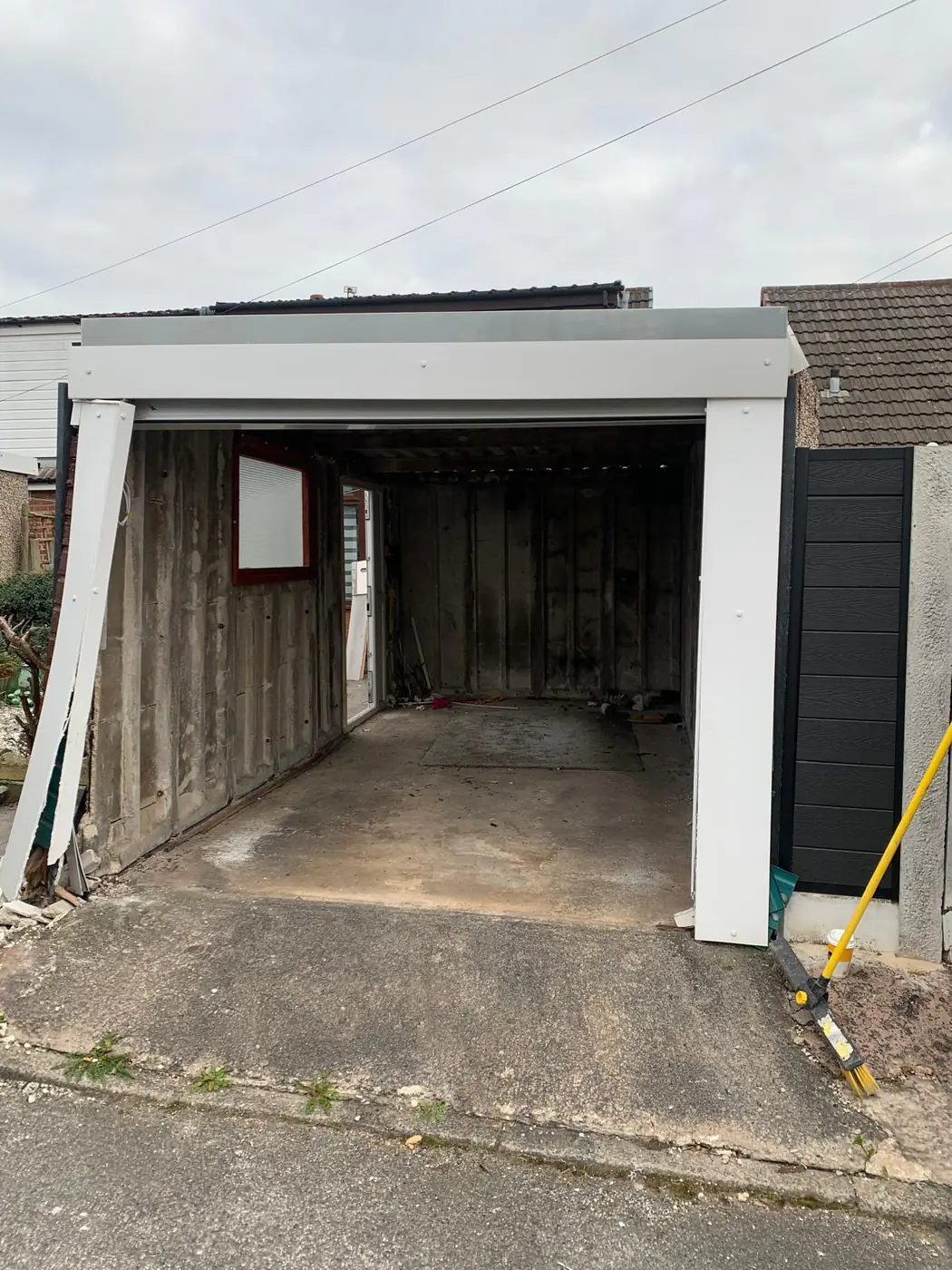
If you have an old prefabricated garage with a corrugated grey roof, there is a good chance it contains asbestos cement. Midland Base Works removes and disposes of these structures safely, and clears the site ready for whatever you want to put in its place.
The asbestos sheeting used in garage roofs and wall panels is classed as non-licensed work under the Control of Asbestos Regulations 2012. That means it does not require an HSE-licensed contractor — but it does require trained operatives, the right controls, and legal disposal. We are trained for non-licensed asbestos removal, fully insured, and registered with the Environment Agency as a waste carrier, so the material leaves your property properly documented.
What the service covers:
- Non-licensed asbestos removal: Asbestos cement roof sheets, wall panels, gutters and downpipes removed intact using HSE-recommended controlled methods.
- Full garage demolition: Concrete panel, steel, timber and brick garages dismantled and cleared, including the old base if required.
- Certified disposal: Waste double-wrapped, labelled and taken to a permitted facility, with a consignment note issued to you.
- Site clearance and levelling: All debris removed and the ground left clean, level and ready to build on.
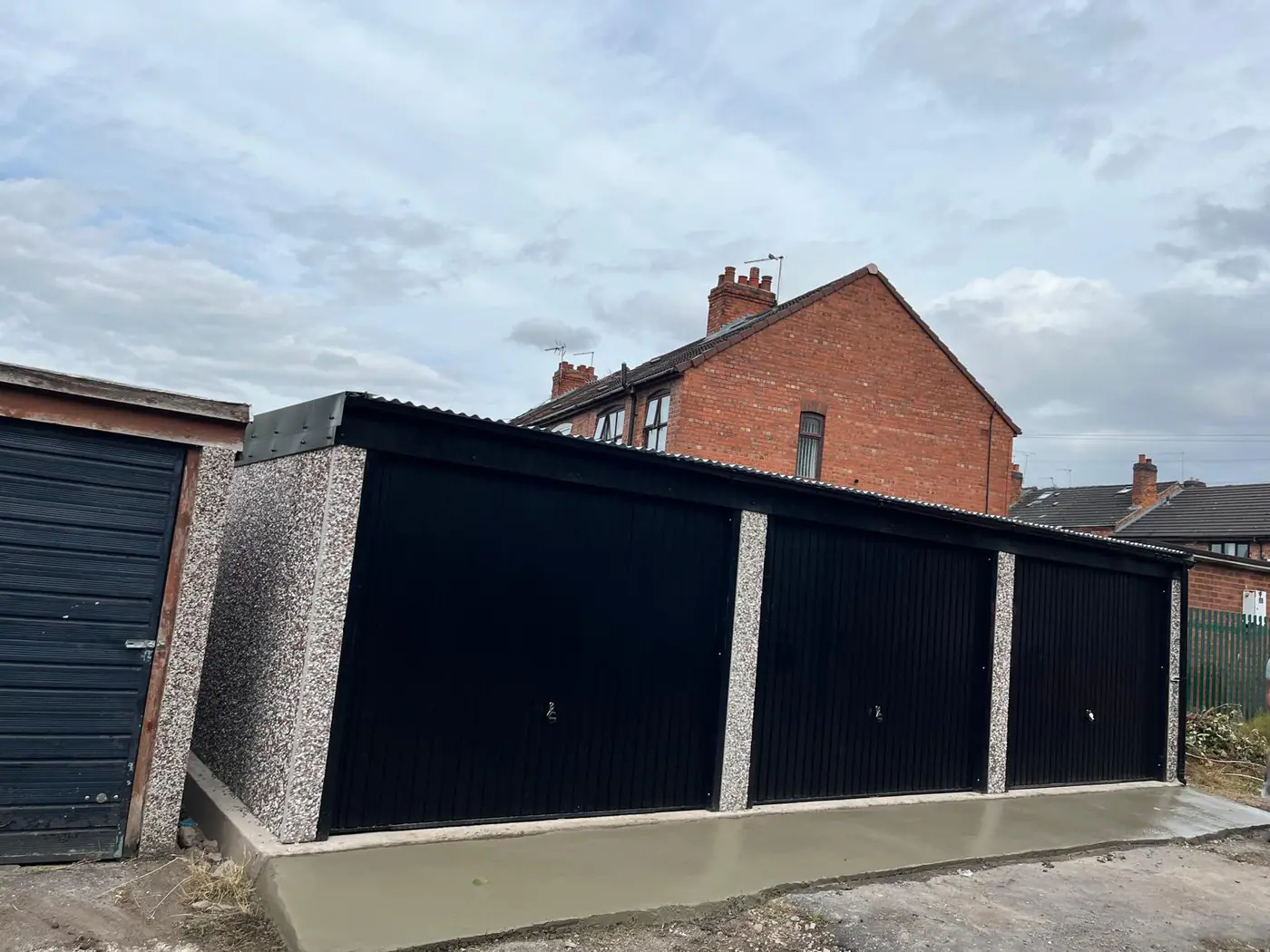
- Replacement in one visit: Optional new concrete base, replacement garage or conversion, handled by the same team.
Free site visits across Wolverhampton and the West Midlands. Request a no-obligation quote.
Licensed vs Non-Licensed: What It Means For You
Homeowners are often told they need a “licensed asbestos contractor” for any asbestos work at all. For a domestic garage, that is usually not the case, and it can lead to people paying specialist rates unnecessarily — or worse, putting the job off for years while the material deteriorates.
Licensed work covers the highest-risk materials: sprayed asbestos coatings, thermal lagging on pipes and boilers, and most asbestos insulating board. This work must be done by an HSE-licensed contractor and notified in advance.
Non-licensed work covers lower-risk, more tightly bound materials — most importantly asbestos cement, which is what garage roofs, wall panels and rainwater goods are made from. It does not need an HSE licence, but it is still regulated work requiring trained operatives, controlled removal methods and legal disposal.
If we inspect your garage and find something that does require a licensed contractor, we will tell you straight and point you to one. We would rather lose the job than take on work that is not ours to do.
How the job runs
A typical single garage is a one-day job from arrival to clear site.
- 1
Free site visit
We look at the structure, identify the likely materials and confirm access. You get a fixed written quote.
- 2
Controlled removal
Sheets taken down whole and kept damp. No power cutting, no breaking up, no dropping from height.
- 3
Wrapped and consigned
Waste double-wrapped, labelled and carried under our waste carrier registration to a permitted facility.
- 4
Clear, level site
Debris cleared and ground levelled — ready for a new base, a replacement garage, or just reclaimed garden.
Asbestos Garage Removal FAQs
Can I remove an asbestos garage myself? +
There is no legal requirement for a householder to hold a licence to remove asbestos cement from their own property. That is a statement about the legal threshold, though, not about whether it is a sensible thing to do. The Health and Safety Executive identifies asbestos as the single greatest cause of work-related death in Great Britain, accounting for around 5,000 deaths a year. Asbestos-related diseases such as mesothelioma and asbestosis typically take decades to develop, so there is no immediate sign that anything has gone wrong. In practice the obstacle that stops most DIY removals is not taking the sheets down — it is disposing of them legally afterwards.
Why is asbestos dangerous to handle without training? +
Asbestos cement is comparatively stable while it is intact and in good condition. The danger comes from how it is handled. Snapping or dropping sheets, drilling them, or cutting them with an angle grinder or other power tool releases respirable fibres into the air, and weathered or damaged sheets shed fibres far more readily than sound ones. Regulation 11 of the Control of Asbestos Regulations 2012 requires exposure to be prevented, or reduced to the lowest level reasonably practicable. In practical terms that means removing sheets whole, keeping them damp to suppress dust, hand-lowering rather than dropping, and never using power tools. The HSE sets out the accepted methods in its Asbestos Essentials guidance, HSG210.
Why is asbestos waste so difficult to get rid of? +
Because it is hazardous waste, not builders' rubble. Asbestos cement is classified under List of Waste code 17 06 05*, and it can only go to a facility specifically permitted to accept it — not a skip, and not the general waste stream. Anyone transporting waste in the course of a business must be registered with the Environment Agency as a waste carrier, which is why most skip hire firms and general builders will not touch it. Each movement of hazardous waste must also travel with a consignment note under the Hazardous Waste (England and Wales) Regulations 2005. Most council household waste recycling centres either refuse asbestos outright or cap it at a few sheets with pre-booking. This is usually where DIY removal stalls: the sheets come off in an afternoon and then sit in the garden for months because there is nowhere lawful to take them.
What happens if asbestos waste is disposed of incorrectly? +
Householders have a duty of care under section 34 of the Environmental Protection Act 1990 to ensure their waste is transferred only to an authorised person. Depositing controlled waste without a permit is an offence under section 33 of the same Act, and carries an unlimited fine and, in serious cases, imprisonment. Setting the legal position aside, asbestos that has been fly-tipped or buried on site tends to cost the property owner considerably more to put right later than lawful disposal would have cost at the time, and it has an awkward habit of surfacing during a conveyancing survey.
Does the work need an HSE-licensed contractor? +
For a domestic garage, usually not. The Control of Asbestos Regulations 2012 divide work into licensed and non-licensed categories, and the asbestos cement used in garage roofs, wall panels and rainwater goods falls into the non-licensed category. An HSE licence is required for higher-risk materials such as sprayed coatings, thermal lagging and most asbestos insulating board, which are rarely found in a domestic garage. Non-licensed does not mean unregulated: the work still requires trained operatives under Regulation 10, proper controls under Regulation 11, and waste consigned to a permitted facility.
How do I know if my garage contains asbestos? +
Any garage built or re-roofed before 2000 may contain asbestos cement, and it is very common in prefabricated concrete-panel garages of the 1950s to 1980s. Typical signs are corrugated grey roof sheets, flat wall panels, and cement gutters or downpipes. You cannot identify asbestos reliably by eye — it needs a laboratory-tested sample. If you are unsure, do not disturb it, and treat it as though it does contain asbestos until proven otherwise.
How is the asbestos handled and disposed of? +
Sheets are removed whole wherever possible rather than broken up, kept damp to suppress fibres, and hand-lowered instead of dropped. Nothing is cut with power tools. The material is double-wrapped and labelled, then transported under our waste carrier registration to a permitted disposal facility. You receive a consignment note confirming the waste was disposed of legally — worth keeping with your property paperwork.
How much does asbestos garage removal cost? +
Cost depends on the size of the garage, how much asbestos is present, the condition of the material and how easily we can get to it. A single prefabricated garage is usually a one-day job. Because disposal is charged by weight and volume, we always quote after seeing the structure rather than giving a figure over the phone. Site visits and quotes are free and carry no obligation.
What happens to the site after the garage is removed? +
We clear the debris and leave the ground level and ready for whatever comes next. Most customers take the opportunity to have a new concrete base laid at the same time, which avoids a second mobilisation and a second set of costs. We can move straight from demolition into a new base, a replacement garage, or a full garage conversion.
Do you remove garages that do not contain asbestos? +
Yes. We demolish and clear timber, steel, brick and concrete-panel garages as well, along with sheds, outbuildings and redundant hardstanding. The same site clearance and groundwork service applies whether or not asbestos is involved.
Sources and further reading
The regulations and figures referenced above, should you want to check them yourself. We are a contractor rather than a legal advisor — if you need a definitive answer for your own situation, the HSE and your local authority are the right places to ask.
- Control of Asbestos Regulations 2012 (SI 2012/632)
- HSE — Asbestos health and safety guidance
- HSE — Licensed and non-licensed asbestos work
- HSE — Asbestos Essentials (HSG210)
- Environmental Protection Act 1990, section 34 — duty of care
- Hazardous Waste (England and Wales) Regulations 2005
- GOV.UK — Waste carrier, broker or dealer registration
Removing a garage to make room for something new? See garage conversions and concrete base installation.
Other services we offer
One team for the whole job — see everything on our services page or browse recent work in the gallery.
Commercial & Industrial
Floor slabs, hardstanding and drainage
Concrete Base Installation
Garage, shed and garden room bases
Durabase Modular Systems
Modular foundations with a 25-year guarantee
Groundwork Services
Excavation, drainage and site preparation
Boarding Out
Ply lining and insulation for outbuildings
Lidget Compton Garages
Approved installer for concrete garages
Contact Us
Request your free, no-obligation quote today—simply fill out the form below or give us a call. We’ll get back to you within one working day. From new concrete bases to structural upgrades and building sales, you can count on us for expert support at every stage.